
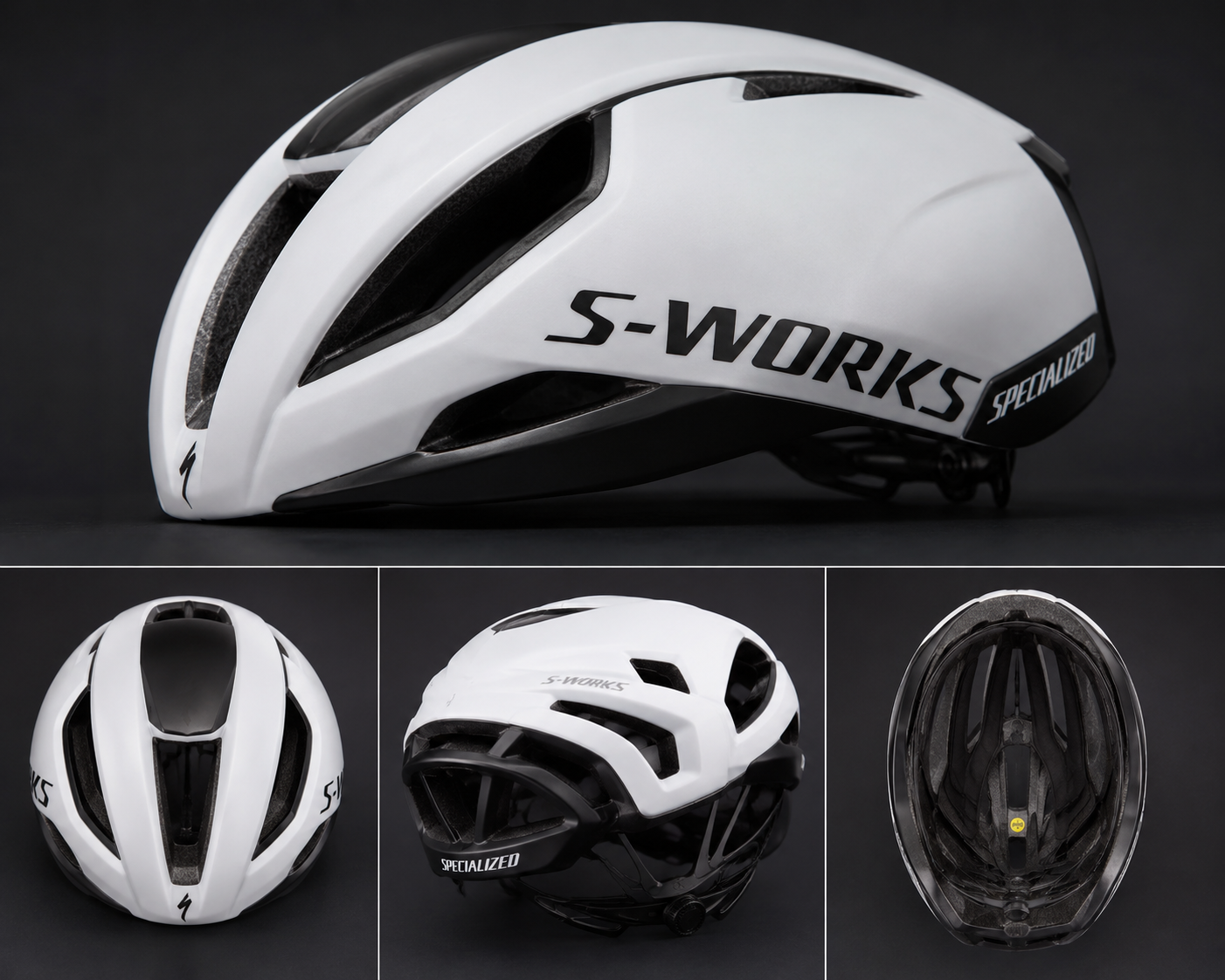
Introduction
There’s a question every serious cyclist eventually asks when standing in front of a $350 helmet: Is this actually better, or is it just a newer number?
With the Specialized S-Works Evade 4, the answer is more nuanced — and more interesting — than a simple yes or no.
Specialized didn’t chase raw aerodynamic gains this time. Instead, they went after something arguably harder to engineer: making a world-class aero helmet that doesn’t make you feel like you’re wearing a toaster on your head. More cooling. Better fit. Same speed.
The result debuted at one of cycling’s biggest stages. The S-Works Evade 4 officially launched the final week of the 2026 Giro d’Italia — with an all-new BOA Fit System that promises even better fit and retention.
Bold debut. Ambitious claims. But does it actually deliver on the road?
We put it through its paces across long training rides, hot days, and race-pace efforts. Here’s everything you need to know before spending your money.
What Is the Specialized S-Works Evade 4?
The S-Works Evade 4 is the fourth generation of one of the most influential aero helmets in modern cycling. The new model aims to maintain the aerodynamic performance that made the Evade a reference within the professional peloton, while clearly improving cooling, fit, and comfort for long and high-intensity efforts.
In plain terms: it’s Specialized’s flagship aero road helmet. It sits at the very top of their helmet hierarchy — designed first and foremost for racing, but engineered to be liveable enough that you’d actually reach for it on training days too.
With the Evade 4, Specialized promise to deliver everything in one package: a lightweight aero helmet that offers improved ventilation and superior cooling, without compromising on aerodynamic drag.
That’s a difficult balance to strike. Aero helmets — by their very nature — restrict airflow to reduce drag. More vents = more drag. More drag = slower. For a decade, helmet engineers have been trying to thread that needle. The Evade 4 is Specialized’s most serious attempt yet.
Where Does It Fit in Specialized’s Helmet Range?
The S-Works Evade 4 is Specialized’s aero-first, race-focused flagship. Below it in the range sits the S-Works Prevail 3 (ventilation-first, endurance/climbing focused) and various mid-range Evade and Align models. Above it, there is nothing — this is as good as Specialized makes.
Who Is It Designed For?
- Road racers and criterium riders who need every marginal gain available
- Gran fondo and sportive riders who spend long hours at speed
- Triathletes looking for a MIPS-equipped aero lid
- Ambitious club riders who want pro-level kit
- Fans of WorldTour teams including Red Bull-BORA-hansgrohe, Soudal Quick-Step, and SD Worx-Protime — the S-Works Evade 4 is now available with the official decorations of these teams and more.
If you race, train hard in heat, or simply want the best aero helmet money can buy in 2026 — this was built for you.
Key Features at a Glance
Let’s break down exactly what makes the Evade 4 different from anything that came before it.
4D Cooling System — What It Actually Does
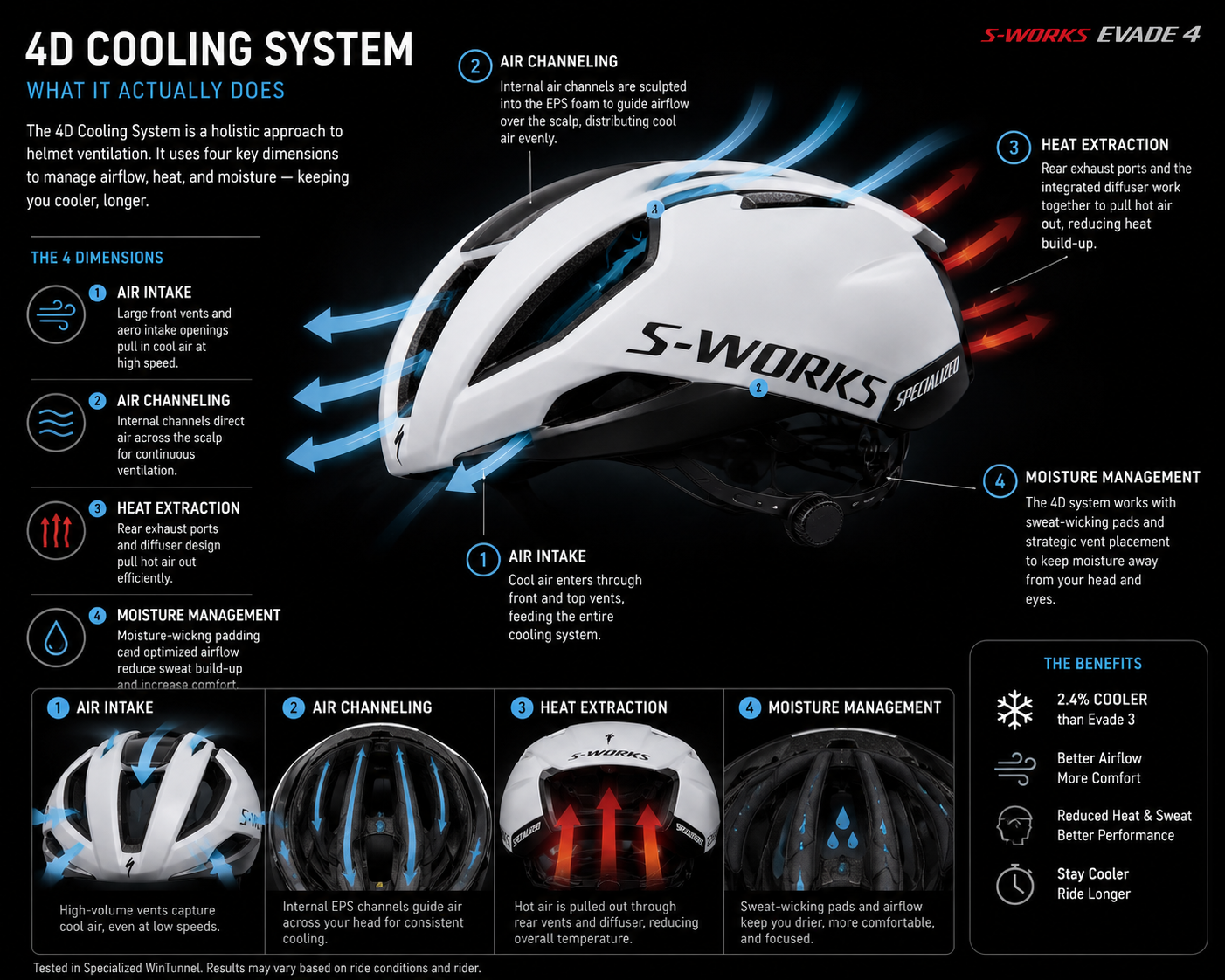
This is the headline engineering story of the Evade 4.
The new 4D Cooling system introduces deeper internal channels that direct air through the helmet more efficiently. This is complemented by a redesigned MouthPort and larger front openings that increase airflow intake.
Where most aero helmets push air over the surface and call it a day, the 4D system pushes air through the helmet in a more deliberate, directed path — from front vents, across the crown, and out through the rear. The result is meaningfully better thermal performance than a traditional aero shell.
It features 7 main ports on the front with the re-introduction of the MouthPort. Specialized states it has 2.4% cooler airflow as a result of the port design.
Two-point-four percent might sound modest. But in the context of aero helmets — where a 0.5% improvement is typically considered significant — it’s a substantial leap.
BOA Fit System with FS2 — A Genuine Upgrade
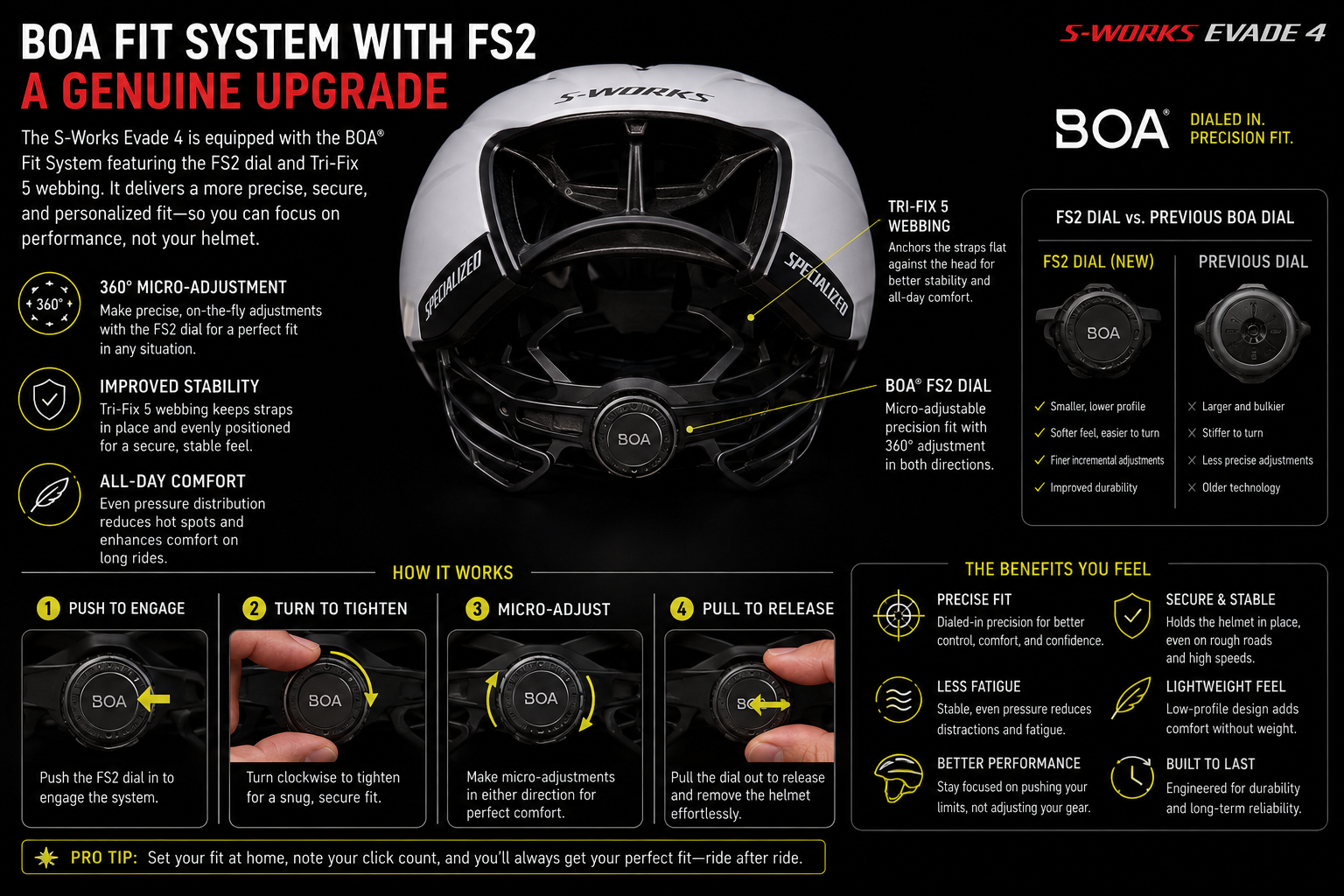
The S-Works Evade 4 helmet features the BOA Fit System with the all-new FS2 dial platform, which provides a micro-adjustable Dynamic360 wrap designed to deliver a more uniform, secure fit that reduces pressure points. The adaptive, low-friction, lace-based system wraps the head evenly to balance tension and reduce peak pressure, resulting in a 6% stronger hold compared to traditional fit systems.
This matters more than it might first appear. The single most common complaint about aero helmets — across every brand, every generation — is fit. Uncomfortable pressure points, hot spots, and retention systems that slip under load have plagued the category for years.
While its predecessor, the Evade 3, caused uncomfortable pressure points around the temples for some riders, the Californian development team overhauled the internal shape for the fourth generation.
The BOA FS2 system allows single-handed, micro-precise on-the-fly adjustments even while riding — something the previous cradle system couldn’t replicate.
MIPS Air Node Pro — Smarter Safety
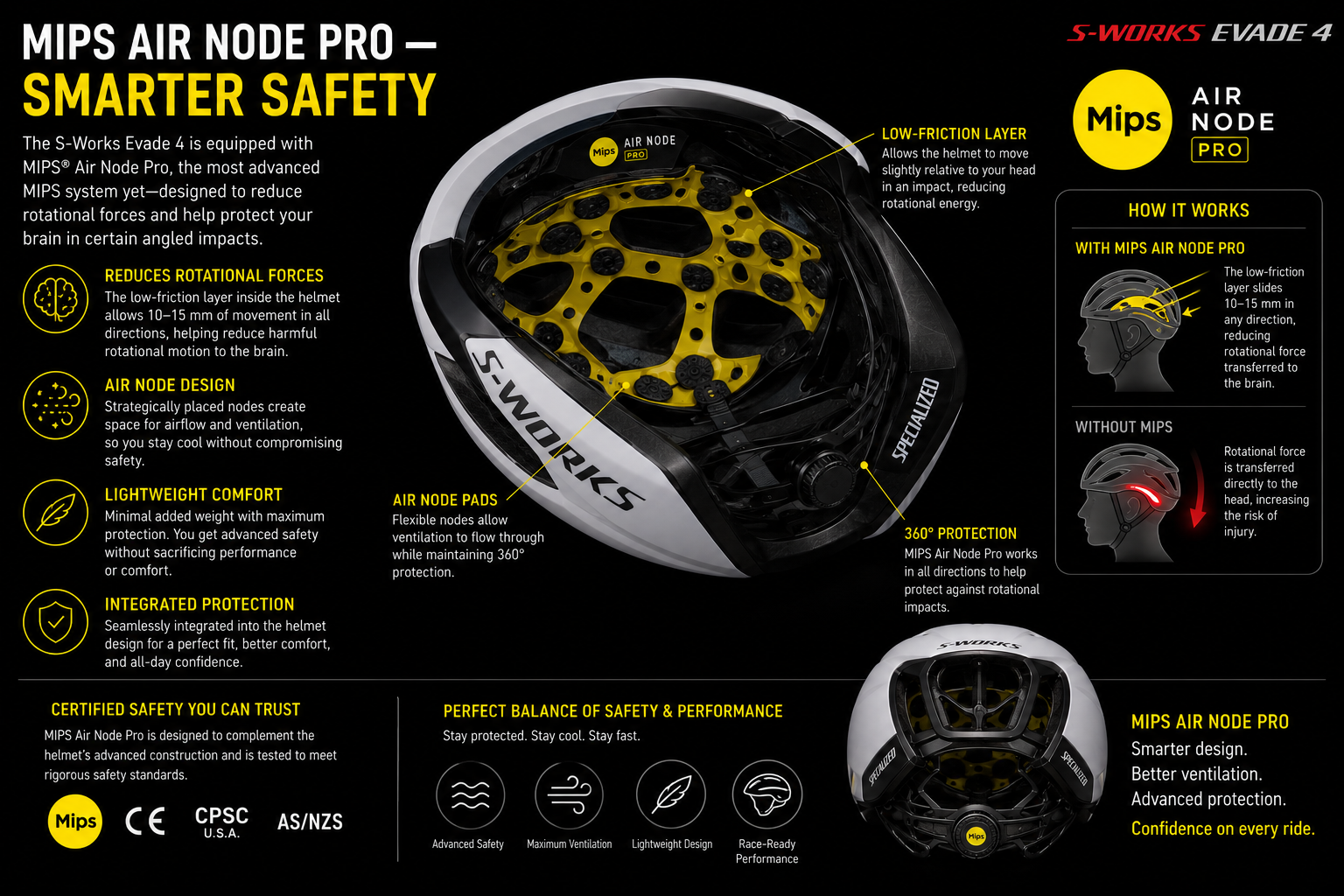
The Evade 4 utilizes the ultra-lightweight Mips Air Node Pro system, which is integrated directly into the minimalist padding. Unlike the large yellow plastic liner found in common mountain bike helmets, this construction is fundamentally different. The system relies on subtle hook-and-loop connections designed to release a crucial twisting movement in the event of an impact, minimizing dangerous rotational forces. The upgrade to MIPS Air Node Pro padding is claimed to provide improved protection against rotational brain injuries in the event of a crash.
At this price point, anything less than best-in-class safety technology would be inexcusable. MIPS Air Node Pro is currently the most refined, lowest-profile MIPS implementation available — almost invisible in the helmet, but fully functional.
Aero Design Borrowed from the TT5
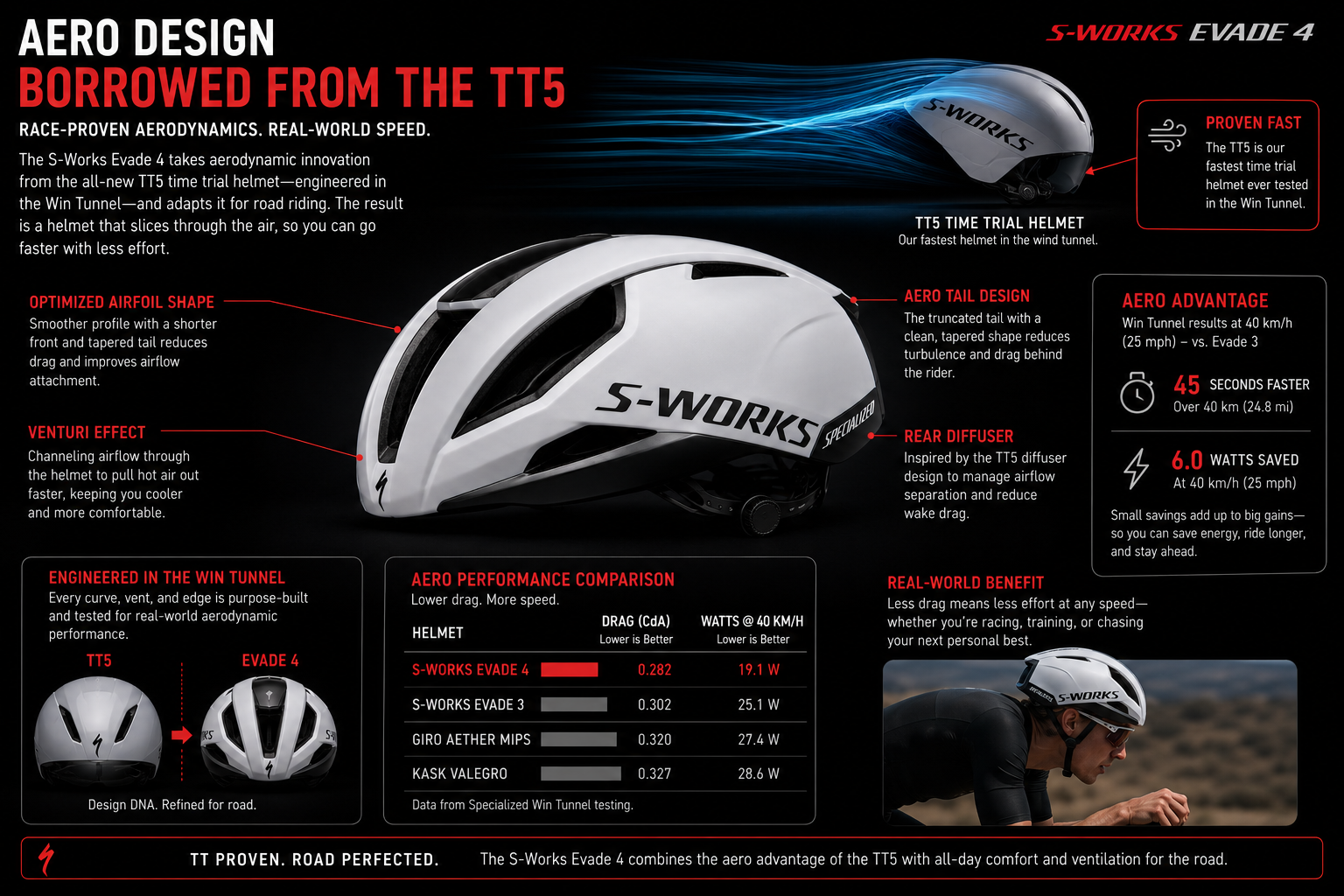
The overall silhouette of the helmet takes direct inspiration from the TT5 time trial helmet. The Evade 4 adopts a flatter top and small rear fins designed to reduce turbulence when the rider is in a low head position, especially during sustained high-speed efforts. Specialized claims to have optimized the laminar flow over the helmet’s surface through a precise redesign of the side vents. The rear outlets now function as diffusers that release air more cleanly, reducing drag without blocking internal circulation.
The engineering logic here is elegant. By borrowing the tail geometry from Specialized’s dedicated TT helmet — which prioritizes airflow management above all else — the Evade 4 manages drag at the rear of the helmet even as it opens up more airflow at the front.
MouthPort Returns — And It Matters
The MouthPort was a distinctive Evade feature that disappeared in a previous generation — and its return has been welcomed by both pros and recreational riders. It’s a ventilation opening at the very front base of the helmet, positioned to capture airflow as a rider breathes.
Thanks to redesigned vents, the return of the distinctive forehead MouthPort, an improved BOA fit system, and an optimized head shape, Specialized promise increased comfort and better cooling, without compromising on aerodynamics.
It also serves a practical purpose: it channels air directly toward sunglasses, helping prevent fogging during intense efforts — a small detail that makes a real difference on hard days.
Full Technical Specifications
The Evade 4 is designed for use in Road, Gravel, and XC Racing. Its 4D Cooling System is WinTunnel tested, the fit system is the BOA Fit System featuring FS2 and Tri-Fix 5 with a new headform, and the safety system is Mips Air Node Pro pads. Weight is 280g CE and 320g CPSC.
| Specification | Detail |
|---|---|
| Official Price | $350 USD / £279 GBP / €329 EUR |
| Weight (CE / Size M) | 280–290g (varies by source; our sample: 287g) |
| Weight (CPSC / Size M) | 320–330g |
| Fit System | BOA FS2, Dynamic360 wrap, Tri-Fix 5 straps |
| Safety | MIPS Air Node Pro |
| Cooling Technology | 4D Cooling System, 7 front ports, MouthPort |
| Certifications | CE (Europe), CPSC (USA) |
| Intended Use | Road, Gravel, XC Racing |
| Testing | 100+ hours, WinTunnel + thermal |
| Ventilation Gain vs. Evade 3 | 2.4% cooler (Specialized claim) |
Colors & Availability
The Specialized Evade 4 costs £279 / $350 / €329 and is available in six colours: Black, White, White/Red, Root Beer, Silver/White, and Multi Aurora.
Additional Team Replica colorways — matching the liveries of WorldTour teams — are also available at select retailers. The Evade 4 is also offered in an integrated MIPS Air Node version with Occipital Base Adjustment, Redesigned Tri-Fix straps, and optimized compatibility with glasses in the Team Replica version priced at 289 euros.
On The Road — Real-World Performance
Tech specs tell you what a helmet promises. Real riding tells you what it delivers.
Aerodynamics: As Fast As the Evade 3?
The main goal of the Evade 4 for Specialized was to retain the same aero performance while increasing ventilation and adding comfort.
And based on both the WinTunnel data and real-world riding, they appear to have held the line. There are no measurable aerodynamic gains over the Evade 3 — but critically, there are no losses either.
The fourth generation lands on a combination of one of the most popular lids in the professional peloton with a redesigned shell that runs cooler than the Evade 3 without giving back any of the aero.
In practice, at speeds where helmet aerodynamics actually matter (above 35 km/h), the Evade 4 feels every bit as planted and smooth as its predecessor. Head movement in crosswinds produces no discernible yaw effect at typical road-race speeds. The flatter top geometry keeps it stable even in a low, aggressive position.
Ventilation & Cooling: A Noticeable Improvement
This is where the Evade 4 earns its upgrade price.
Cooling is where this generation puts in real work. The Evade 4 is 2.4% cooler, thanks to redesigned vents, and the reintroduction of a new MouthPort paired with optimized internal channels.
On long summer rides in temperatures above 25°C (77°F), the difference compared to the Evade 3 is genuinely perceptible. The directed internal channels push air in a more purposeful path across the top of your head rather than simply letting it skim the surface. You notice it most on climbs — where speed drops but effort (and heat generation) spikes.
The Evade 4 incorporates new Mips Air Node Pro pads, developed to improve sweat evacuation and reduce moisture buildup during intense efforts or very hot stages.
The pads absorb and distribute sweat rather than letting it pool — a detail that matters enormously over three-hour efforts in summer heat.
Fit & Comfort: The BOA Difference
The BOA FS2 system is the most transformative upgrade for everyday riders.
Regardless of how aero or breathable a helmet is, the defining feature remains fit and comfort. When a helmet fits properly, it goes largely unnoticed. The best helmets simply disappear and do their job without annoying the rider. Flappy straps, odd pressure points, and dripping sweat onto sunglasses are all common annoyances — the all-new S-Works Evade 4 will have none of that nonsense.
The BOA dial allows genuine micro-adjustment — not the approximate half-turn increments of older cradle systems. You can dial in the exact tension you want, on the fly, with one finger, without looking. Tri-Fix 5 keeps the straps perfectly positioned under the ears without requiring constant readjustment.
For riders who struggled with the Evade 3’s temple pressure, the revised internal shell geometry makes a meaningful difference. The BOA Fit System featuring FS2 delivers a micro-adjustable, multi-directional, precision fit with improved connection and fewer pressure points.
Sweat Management & Long-Ride Comfort
The TX1.2 lace is a low-friction, textile lace solution engineered with a soft yet durable contact surface that conforms to the head, maintaining a secure, precise fit in the toughest conditions, from extreme cold to heat. Its zero-stretch construction and long-term durability help sustain consistent protection performance and preserve helmet fit over time.
After five hours in the saddle, the Evade 4 still sits where you put it. That’s the BOA system’s real world benefit — retention without the gradual slippage that cradle systems develop under heavy sweat load.
Evade 4 vs. Evade 3 — What’s Changed?
Despite most aero helmet manufacturers persistently seeking aerodynamic improvements, Specialized has, for the second time in a row, updated the Evade with no claims of being ‘faster’ in this sense.
Here’s the complete picture of what changed:
| Feature | Evade 3 | Evade 4 |
|---|---|---|
| Price | $300 USD | $350 USD |
| Weight (CE/M) | ~275g | ~287–290g |
| Fit System | Traditional cradle | BOA FS2 Dynamic360 |
| Strap System | Older Tri-Fix | Tri-Fix 5 |
| Safety | MIPS Air Node | MIPS Air Node Pro |
| Cooling | Standard vents | 4D Cooling System |
| MouthPort | No | Yes (re-introduced) |
| Rear Vents | Standard exhaust | Diffuser-style exhaust |
| Side vents | Fewer | Additional rear-side vent per side |
| Shell shape | Evade 3 headform | New wider headform |
| TT5 inspiration | Partial | Full (flat top, tail fins) |
| Aero performance | Benchmark | Equal to Evade 3 |
| Team Replica options | Limited | Expanded WorldTour range |
Bottom line: The Evade 4 is heavier by roughly 12–15g due to the BOA system, but makes up for it comprehensively in fit refinement, cooling, and comfort. For most riders, that’s a trade well worth making.
Evade 4 vs. The Competition
vs. Kask Elemento (~€400 / $400)
The Kask Elemento is the most direct rival — also a premium aero road helmet with MIPS and excellent ventilation. The Elemento is lighter at around 230g and has a more traditional cradle fit system. However, it costs significantly more and many riders find the fit narrower. The Evade 4’s BOA system offers superior micro-adjustment. Edge: Evade 4 on fit and value; Elemento on weight.
vs. POC Procen Air (~$400)
The POC Procen Air is designed primarily for time trials but crosses over into road use. It’s more aggressively aero with less ventilation than the Evade 4 — a different trade-off. 6Since the POC Procen Air is $400, it’s not the most expensive helmet around, making the Evade 4 relatively competitive at $350. Edge: Evade 4 on everyday versatility and value.
vs. Oakley Velo Mach
The Oakley Velo Mach is noted as the fastest road helmet tested by Cyclingnews, but raises questions about whether it justifies its hefty price tag. It edges out the Evade 4 in pure aerodynamic performance at high yaw angles, but the Evade 4 wins on brand ecosystem fit (especially for Specialized bike owners), comfort, and the overall package. **Edge: Velo Mach on raw aero; Evade 4 on comfort and value.**
Who Should Buy the Specialized S-Works Evade 4?
It’s Perfect For…
- Road racers who need race-proven aero at competitive prices
- Gran fondo / sportive riders tackling long summer events — the cooling upgrade is genuine
- Hot-weather riders who previously found aero helmets unbearable in summer
- Specialized bike owners who want a cohesive kit aesthetic
- Riders who struggled with Evade 3 temple pressure — the new headform resolves this
- Anyone who wants WorldTour-quality tech without paying $400+
- Versatile riders, as this helmet is suitable for road racing, gravel riding, and XC mountain biking, making it a smart choice for riders who practice multiple cycling disciplines.
You Might Want to Look Elsewhere If…
- You’re weight-obsessed — the BOA system adds ~12–15g vs. the Evade 3. Pure climbers should consider the S-Works Prevail 3 instead.
- Your budget is under $300 — there’s no discount version of this helmet. The Evade 4 (non-S-Works) offers a price alternative.
- You ride exclusively in cool climates — you won’t benefit from the 4D Cooling engineering if you’re rarely in heat.
- You have a very narrow head — the new wider headform is an improvement for most, but narrow-headed riders may prefer the Kask Elemento’s fit profile.
Price, Value & Where to Buy
Is $350 Worth It?
The Evade 4 costs $350 — $50 more than its predecessor. That’s not a trivial jump. So let’s be direct about what your extra $50 buys:
- The BOA FS2 fit system — genuinely better than any cradle system at this category
- MIPS Air Node Pro (upgraded from standard Air Node)
- 4D Cooling System with MouthPort return
- Revised headform addressing the Evade 3’s documented pressure complaints
- New Tri-Fix 5 strap system
The brand claims to have invested more than 100 hours in testing within its WinTunnel and in specific thermal trials with instrumented mannequins and professional riders.
If you ride more than three times per week, race regularly, or spend extended time in hot conditions — $350 for a helmet you’ll wear for three to five years is a reasonable investment. It works out to roughly $5–6 per week of use. Compared to what most cyclists spend on bike components, tires, or nutrition, this is not an unreasonable expense.
Specialized’s S-Works Evade 4 keeps chipping away at the aero vs. cooling tradeoff, built around a new headform, a BOA fit system, and thermal engineering that Specialized validated through over 100 hours of aerodynamic and thermal testing in the WinTunnel.
Where to Buy: Available directly from Specialized’s website, authorized Specialized dealers, and major online cycling retailers including Excel Sports, Incycle, and Wheat Ridge Cyclery.
Frequently Asked Questions
Q: How much does the Specialized S-Works Evade 4 cost? A: The Specialized S-Works Evade 4 retails at $350 USD / £279 GBP / €329 EUR. Team Replica versions are available from €289 EUR depending on colorway.
Q: How much does the Specialized S-Works Evade 4 weigh? A: The claimed weight from a size medium Evade 4 is 290g for a CE-certified model, or 330g for a CPSC equivalent. Real-world samples have typically come in slightly under the claimed CE weight.
Q: Does the Specialized S-Works Evade 4 have MIPS? A: Yes. The Evade 4 includes MIPS Air Node Pro — Specialized’s most advanced MIPS integration — built directly into the helmet’s padding without a visible plastic liner.
Q: Is the Evade 4 cooler than the Evade 3? A: According to Specialized, the new Evade 4 is 2.4% cooler than the Evade 3 without sacrificing a single watt of aerodynamic efficiency. Real-world rider feedback confirms this improvement is perceptible, especially on climbs and in high temperatures.
Q: What colors does the Specialized S-Works Evade 4 come in? A: It is available in six colours: Black, White, White/Red, Root Beer, Silver/White, and Multi Aurora. Additional WorldTour Team Replica colorways are also available.
Q: What fit system does the Evade 4 use? A: The S-Works Evade 4 uses the BOA Fit System featuring the all-new FS2 dial platform, which provides a micro-adjustable Dynamic360 wrap designed to deliver a more uniform, secure fit that reduces pressure points.
Q: Is the Evade 4 good for gravel or XC riding? A: Yes. This versatile helmet is suitable for road racing, gravel riding, and XC mountain biking, making it a smart choice for riders who practice multiple cycling disciplines.
Final Verdict
The Specialized S-Works Evade 4 doesn’t reinvent the aero helmet. But it does something arguably more useful — it makes the world’s best aero helmet platform significantly more comfortable, better fitting, and genuinely cooler to wear, without giving up a single watt of aerodynamic performance in exchange.
The fourth-generation Evade aims to make a bold statement, not just aerodynamically but visually too. If you are looking for subtle understatement, you are definitely in the wrong place.
The BOA FS2 system alone justifies the upgrade for riders who were frustrated with the Evade 3’s fit. The 4D Cooling improvements are real and meaningful in hot conditions. The MIPS Air Node Pro brings the safety story fully up to date.
The only genuine criticism is the slight weight increase — around 12–15g heavier than the Evade 3 — and the $50 price jump. Neither is a dealbreaker for the target audience.