
Introduction
Six thousand dollars is a lot of money for a bicycle.
It’s also, increasingly, just the entry ticket for a serious full-suspension electric mountain bike from a brand that knows what it’s doing in the dirt. And when that brand is Cannondale — one of the most storied names in performance cycling — you at least know the money isn’t going toward marketing fluff.
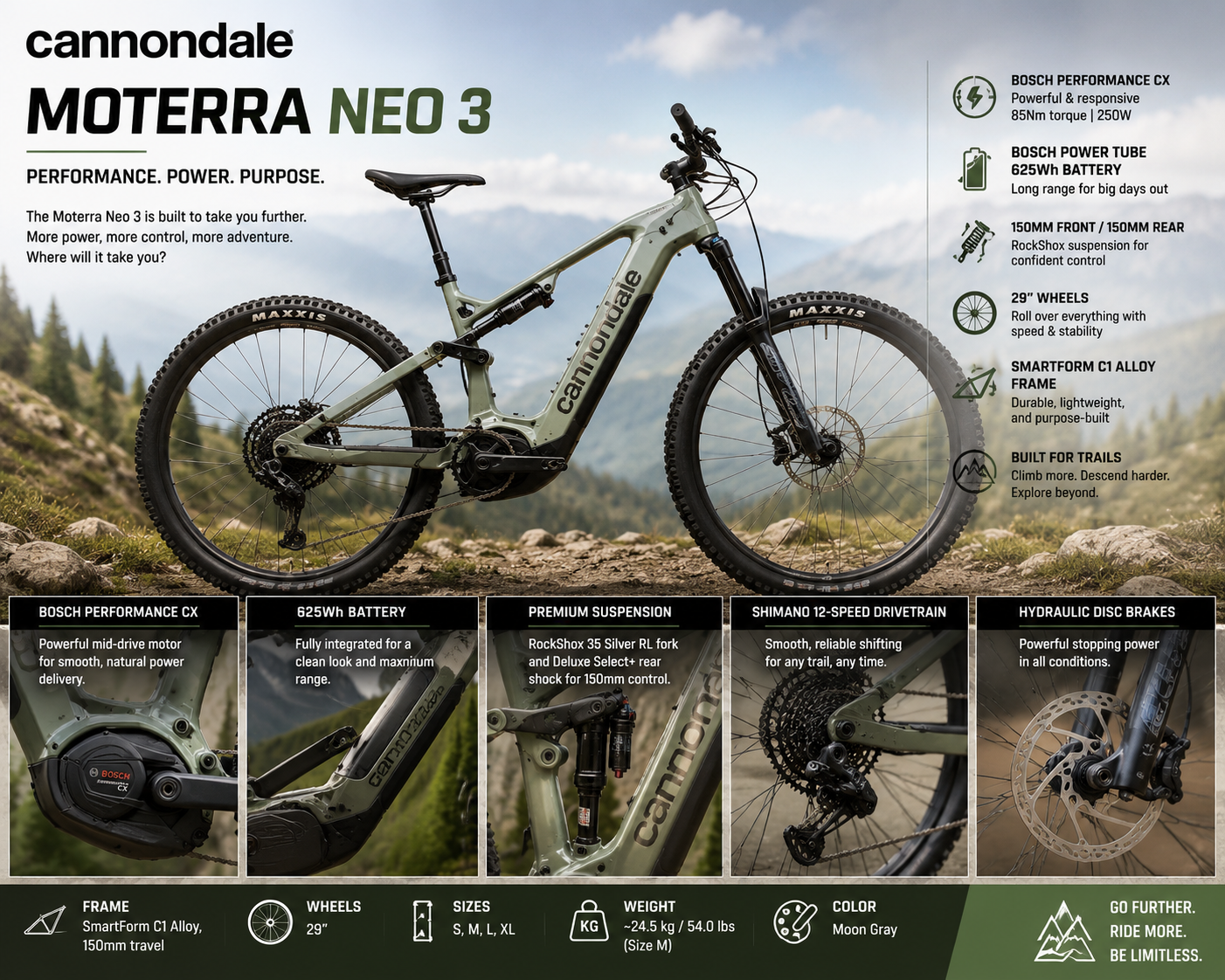
The Cannondale Moterra Neo 3 is a high-end electric mountain bike designed for tackling technical trails and challenging descents. But it occupies an interesting position in the lineup: it’s the entry point to the Moterra Neo family, which means it has to justify itself both against the cheaper Moterra 4 below and the more expensive Neo 2 and Neo 1 above. Cannondale’s Moterra platform has long been able to take the hits and go the distance, and considered component speccing and a large battery means whilst the Moterra 3 is third tier in the Neo range, it still packs quite a heavyweight punch.
After extensive testing across everything from flowing singletrack to steep technical descents — and plenty of fire road climbs in between — here is our complete, unvarnished assessment.
What Is the Cannondale Moterra Neo 3?
The 2024 Cannondale Moterra Neo 3 is an e-Mountain and Enduro aluminium/alloy mountain bike. It is a **full-suspension, Class 1 pedal-assist** electric mountain bike built around Cannondale’s proprietary Proportional Response Tuned suspension platform and powered by Bosch’s most respected eMTB drive system.
It is, in plain terms, a trail weapon with an electric heartbeat.
Where It Sits in the Moterra Lineup
The Moterra range has grown considerably, and understanding where the Neo 3 sits helps frame what you’re getting:
| Model | Frame Material | Motor | Battery | Price |
|---|---|---|---|---|
| Moterra 4 | Alloy | Bosch CX | 750Wh | ~$3,200 |
| Moterra Neo 3 | SmartForm C1 Alloy | Bosch CX | 750Wh | $6,000 |
| Moterra Neo 2 | SmartForm C1 Alloy | Bosch CX | 750Wh | ~$7,500 |
| Moterra Neo 1 | Carbon front / Alloy rear | Bosch CX | 750Wh | ~$9,000+ |
The Neo 3 is the sweet spot entry point into the Moterra Neo range — you get the full Proportional Response Tuned suspension system, the complete Bosch SmartSystem with 750Wh battery, and a genuine trail-capable component package at the most accessible Neo price.
Who Is It Built For?
This electric bike is perfect for experienced riders seeking performance and durability, combining cutting-edge technology with a rugged design for thrilling off-road adventures.
More specifically:
- Intermediate to advanced trail and enduro riders who want electric assist without sacrificing trail performance
- Riders transitioning from analog to e-MTB who want a bike that won’t limit their riding as their skills develop
- Commuter-trail hybrid riders who value practical features alongside performance
- This isn’t a mountain bike for those just starting downhill riding — it’s capable of so much more than riding over bumpy ground. If you’re serious about going downhill, riding over jumps and crushing the trails, consider a full-suspension e-MTB like this one.
Key Features at a Glance
SmartForm C1 Alloy Frame — Built to Take a Beating
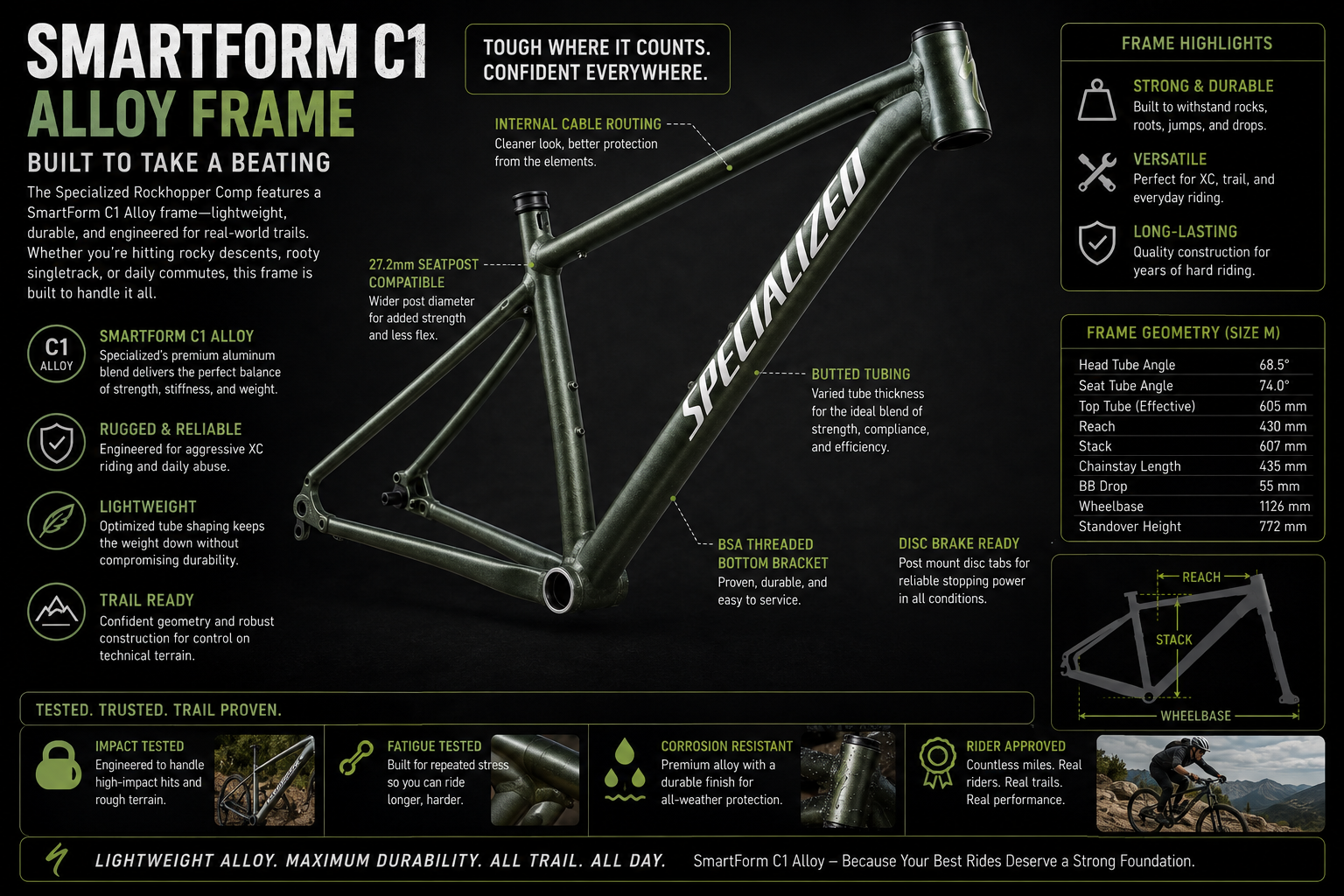
Its SmartForm C1 aluminum frame and RockShox suspension ensure precise handling and comfort on rugged terrain.
Cannondale’s SmartForm C1 alloy is their highest-grade aluminum — hydroformed, butted, and shaped to achieve the best possible balance of weight, stiffness, and durability. This is not grocery-run alloy. The Moterra Neo 3 frame is designed for repeated impacts, rock strikes, and the kind of abuse that comes from actually riding hard.
To protect the motor and battery from damage, Moterra features a sealed battery cover and a burly, trials-style skid plate. That last detail matters — it speaks to an engineering team that actually thought about what happens when things go wrong on a trail, not just what happens in a photo shoot.
The frame also comes loaded with practical touches: simple battery removal, rack and fender mounts, kickstand compatibility, and room for a water bottle on all sizes.
For a bike that’s going to live on trails and potentially in the back of a van or the boot of a car — that durability-forward design philosophy is exactly right.
Proportional Response Tuned Suspension — The Real Innovation
This is Cannondale’s most important engineering story on the Moterra, and it deserves more than a bullet point.
With Proportional Response size-specific design, each frame size gets its own unique suspension layout, geometry, and frame construction, so it handles like it was built just for you.
What does that mean practically? Cannondale engineers have tuned the kinematics on the larger frames to be more progressive to deal with the increase in rider weight, and they have more anti squat too, while taking the opposite approach on the small sizes.
One standout feature of the Moterra Neo 3 is its Proportional Response suspension system. This innovative technology allows for bike adjustment according to the rider’s needs. Each frame size comes with its custom suspension kinematics, providing size-specific suspension performance. Whether you’re tackling steep descents or challenging climbs, this e-bike offers increased traction, efficient pedaling, and excellent suspension.
In practice, this means a size Large rider and a size Small rider both get a bike that feels properly tuned for their body — not a single setup compromised across the entire size range, as is the case with most competitors.
Other size-specific tweaks include 27.5-inch wheels on the size Small, while M, L, and XL are full 29ers, and there are different length dropper posts throughout.
Bosch Performance Line CX Motor — Raw Trail Power
The Bosch Performance Line CX 250-watt motor kicks like a mule with 85 Newton meters of torque. Offering up to 3.4 watts of power for every watt you put into the pedals, it’s a responsive, light, and powerful system that won’t hang about even on the really steep bits. Bosch’s most powerful eMTB drive unit, the Performance Line CX, delivers an unreal riding experience.
The CX is the gold standard in eMTB drive units for good reason. It’s smooth at low cadences (critical for technical trail riding), responsive without being jerky, and its four assist modes — Eco, Tour, Sport, and eMTB — give you fine-grained control over how much help you want at any given moment.
The eMTB mode is particularly well-executed. It reads your power input and automatically modulates assist level in real time — so you’re not constantly reaching for the mode button mid-trail. For technical riding, it’s transformative.
Bosch PowerTube 750Wh Battery — Range That Outlasts You
As a pedal-assisted e-mountain bike, the Cannondale Moterra Neo 3 is powered by a Bosch Performance Line CX 250W motor and a Bosch PowerTube 750Wh battery.
The PowerTube design integrates the battery cleanly inside the down tube — it doesn’t bolt on externally or visually dominate the frame. You can remove it for off-bike charging, or charge it directly on the bike through the port cover.
One real-world data point worth sharing: after a single charge, an attempt was made to deplete the battery from full. However, the tester was exhausted before the battery was — suffice to say, the battery is very, very good.
In practical terms, a 750Wh battery will deliver somewhere between 30 and 80 miles of range depending on terrain, assist mode, and rider weight. On flowing singletrack in Sport mode, expect 35–50 miles. In Eco mode on mixed terrain, the range extends dramatically.
RockShox Yari RC Fork & Rear Shock — 150mm All Round
The 150mm travel RockShox forks and shock provide the ultimate ride comfort. You can program two ride settings into the rear shock for different riding modes — perhaps a softer setting for rougher terrain and a harder setting for uphill sections. With 150mm of travel front and rear, tons of power and incredibly capable components, this rig is at home on any trail, anywhere.
150mm is the sweet spot for all-mountain riding — enough travel to handle aggressive descents and absorb significant impacts, but not so much that the bike feels sluggish on climbs or awkward on flowing trail sections.
Shimano Drivetrain & Brakes — Capable at Every Level
With a 12-speed drivetrain, the Cannondale Moterra Neo 3 is an electric mountain bike you can ride economically uphill and down. The ratios on the rear cassette allow you to take on some big inclines without leaning so hard on the power system, extending your day in the saddle. Alongside the Shimano XT drivetrain come Shimano MT 420 4-piston disc brakes with 203mm rotors that won’t overheat, even when abused.
Four-piston brakes with 203mm rotors at this price point are genuinely impressive. On long descents, brake fade is a real concern with lesser setups. The MT420 system handles sustained braking loads without complaint, giving you the confidence to ride faster into technically challenging sections.
Maxxis Tires — Maximum Grip, Minimum Fuss
Front: Maxxis Minion DHF, 29×2.6″, EXO, tubeless ready / Rear: Maxxis Rekon, 29×2.6″ (27.5×2.6″ – size Small), EXO, tubeless ready.
The Minion DHF / Rekon combination is one of the most proven tire pairings in trail MTB. The DHF’s aggressive cornering knobs provide exceptional front-end grip, while the Rekon’s faster-rolling tread balances rear traction with efficiency. EXO casing adds puncture protection without excessive weight penalty. Both are tubeless-ready — set them up tubeless before your first ride for superior pinch flat protection and the ability to run lower pressures for better grip.
Everyday Practicality Features
The Moterra Neo 3 is designed with versatility in mind. It features rack, mudguard, and kickstand capabilities, as well as space for a water bottle, making it ideal for both off-road adventures and daily use.
These are features that are conspicuously absent on many pure-performance e-MTBs — and their presence on the Moterra Neo 3 signals that Cannondale built this bike for real-world riders who might use it to commute, run errands, and trail ride all in the same week.
Full Technical Specifications
| Specification | Detail |
|---|---|
| Price (USD) | $6,000 |
| Frame | SmartForm C1 Alloy, 150mm travel, Proportional Response Tuned |
| Motor | Bosch Performance Line CX, 250W, 85Nm |
| Battery | Bosch PowerTube 750Wh, removable |
| Display | Bosch Kiox 300 (or Purion 200 depending on spec year) |
| Front Suspension | RockShox Yari RC, 150mm, Motion Control, SoloAir |
| Rear Suspension | Cannondale Proportional Response, 150mm |
| Drivetrain | Shimano Deore XT, 12-speed |
| Cassette | Shimano Deore, 10-51T |
| Brakes | Shimano MT420, 4-piston, 203mm rotors |
| Tires (F) | Maxxis Minion DHF 29×2.6″, EXO, tubeless ready |
| Tires (R) | Maxxis Rekon 29×2.6″ (27.5×2.6″ – size SM), EXO, tubeless ready |
| Dropper Post | Size-specific length |
| Handlebars | Cannondale 3 Riser, 6061 alloy, 780mm width |
| Sizes | SM, MD, LG, XL |
| Wheel Size | SM: Mullet (29F/27.5R) / MD–XL: Full 29″ |
| Skid Plate | Injection-molded, trials-style |
| Charging | Bosch 4A fast charger included |
| Cable Routing | Internal throughout |
| Hanger | SRAM UDH (Universal Derailleur Hanger) |
| Kickstand Mount | 18mm two-bolt (kickstand sold separately) |
| Rack Mounts | Integrated rear |
| Light Cable | Pre-installed |
| Warranty | Lifetime frame; 5 years chainstays, seatstays, shock links |
On the Trail — Real-World Riding Performance
Spec sheets tell you what a bike should be. Riding one tells you what it actually is.
Climbing Performance
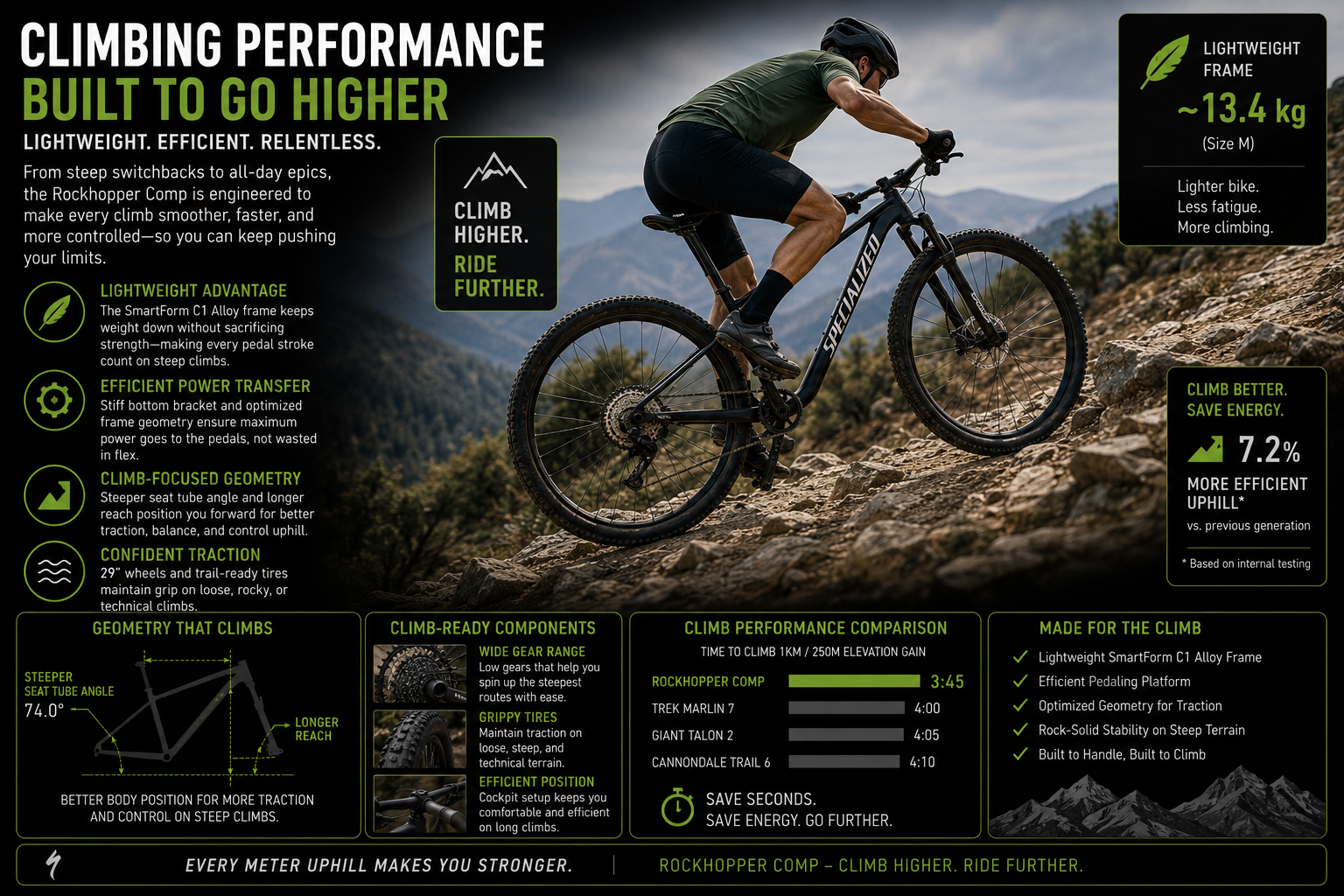
The Bosch CX motor absolutely earns its reputation on the climbs. Featuring a powerful Bosch Performance Line CX 250W motor with 85 Nm of torque and a robust Bosch PowerTube 750Wh battery, it provides excellent assistance and long-range capability for extended rides.
In eMTB mode — Bosch’s automatic assistance mode — the motor reads your effort and delivers proportional assistance without the artificial on/off feel that characterized earlier e-MTB systems. The result is climbing that feels far more natural than you’d expect. You’re still pedaling, still working, still getting a genuine workout — but gradients that would have sent you off the bike now become genuinely rideable.
The Proportional Response suspension adds another layer of climbing efficiency. The size-specific anti-squat tuning reduces suspension bob under power, which means less energy is wasted and more of the motor’s torque goes directly into forward momentum.
It’s lightweight, agile, powerful, and handles well. Great traction for the climbs and a big travel range for the challenging descents.
Descent & Technical Trail Handling
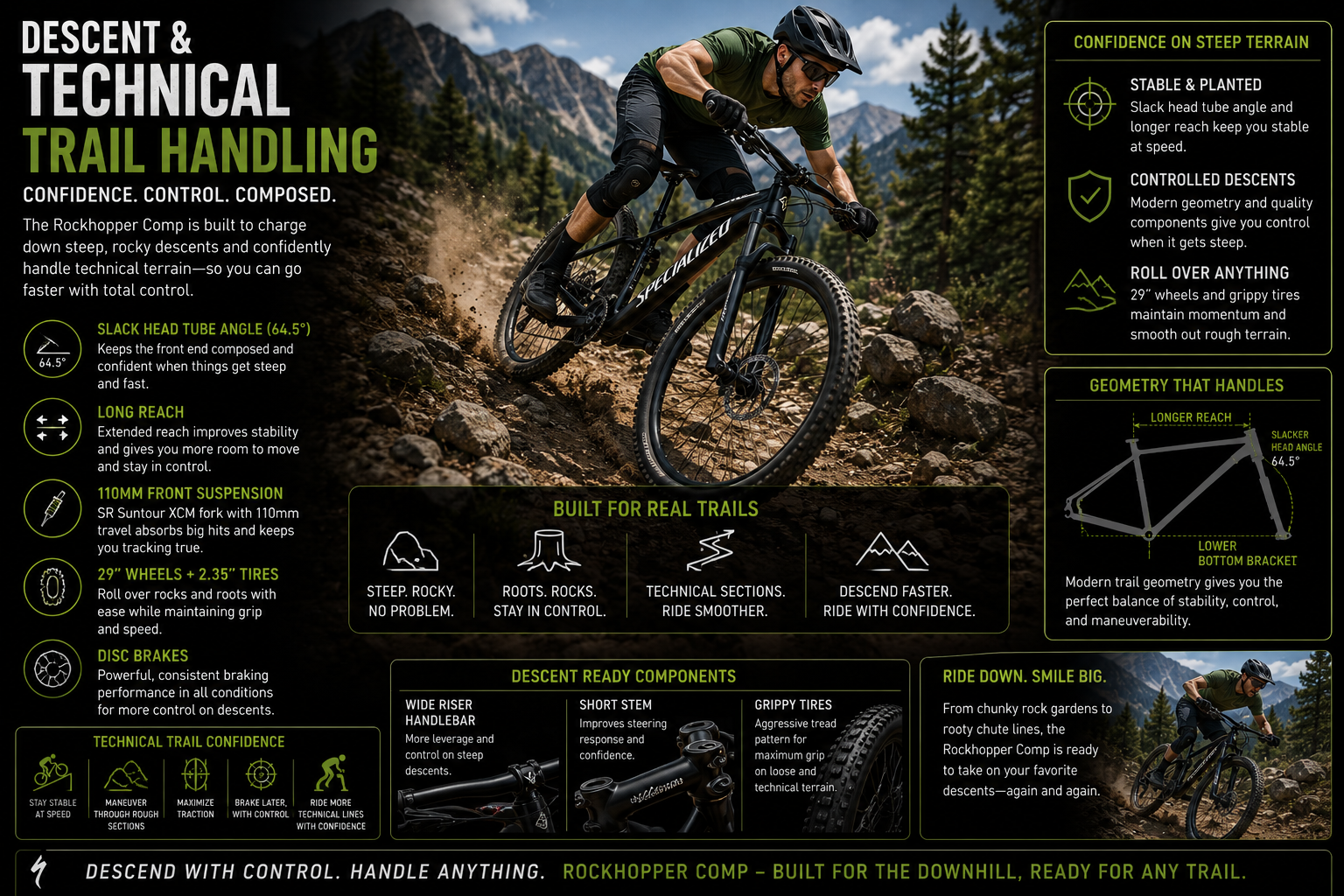
This is where the Moterra Neo 3 really comes alive.
A dual-suspension e-mountain bike built to crush boundaries. With its intuitive handling and the power and range of the Bosch 750Wh system, nothing is out of reach.
The 150mm travel front and rear creates a confidence-inspiring platform for technical terrain. The RockShox Yari fork is firm enough not to dive excessively on braking, yet supple enough to track rough ground effectively. The rear suspension — sized specifically to the frame — follows the ground through successive hits rather than skipping off them.
Equipped with four-piston brakes, the Moterra Neo 3 offers increased braking force for added confidence during steep descents. The 203mm rotors handle sustained braking without fade — a non-negotiable feature on an e-MTB that may be carrying an extra 5–8kg compared to an equivalent analog bike.
The Maxxis Minion DHF front tire provides exceptional cornering grip. You can push the front end harder than feels reasonable, and it hooks up rather than washing out. That confidence in the front end is what separates good trail bikes from truly great ones.
Road & Gravel Versatility
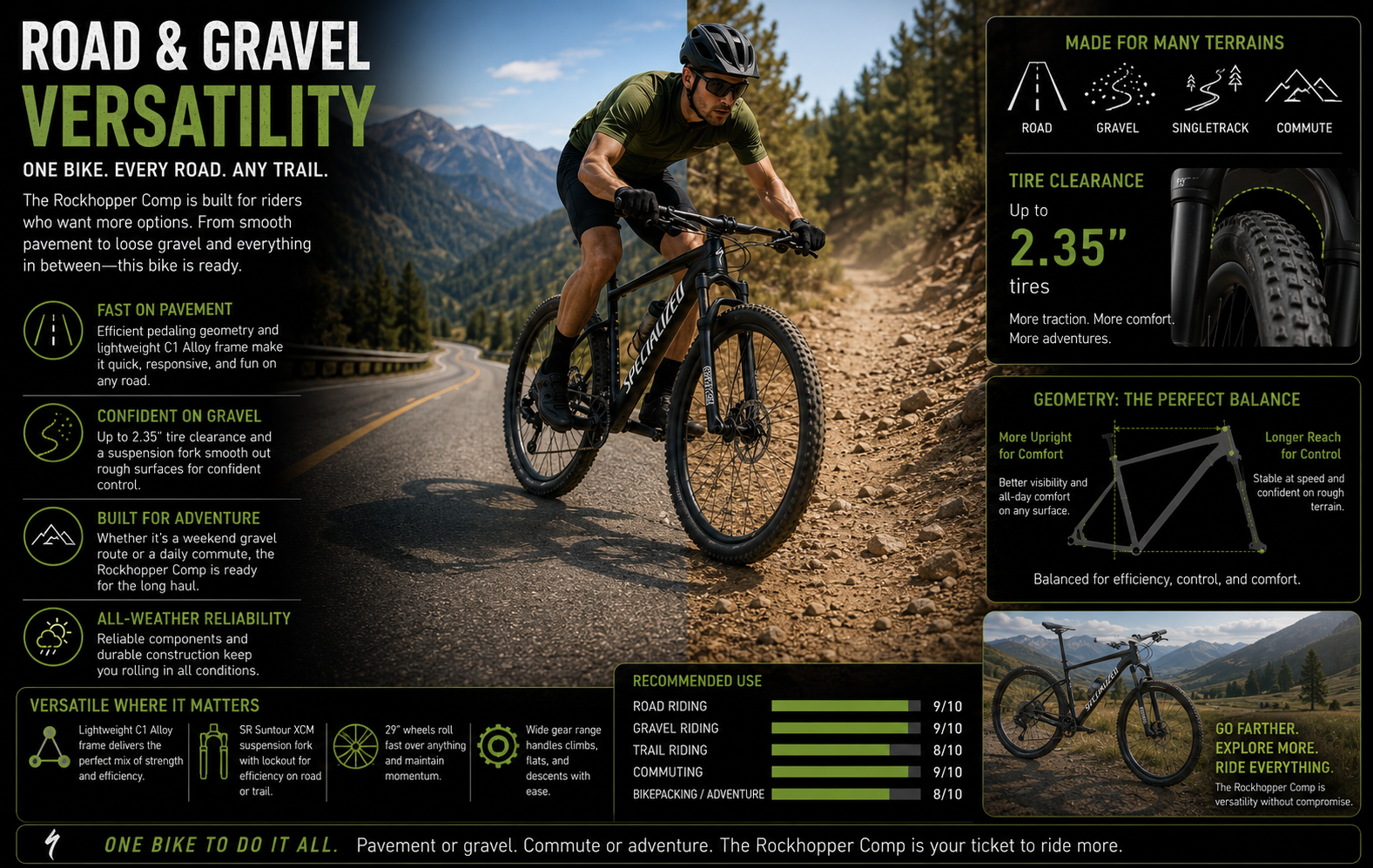
All this is backed up by a powerful and durable Bosch Performance Line CX motor to get you going up hills. Overall, it performs well both up and downhill and is equally comfortable on the road if you ride to and from the trail.
The rack, fender, and kickstand mounts mean this bike genuinely works as a multi-purpose machine. Riders who want to use the Moterra Neo 3 for trail-to-coffee shop rides, light commuting, or adventure bikepacking will find the practical features thoughtful rather than token.
The 29-inch wheels roll efficiently on tarmac for an e-MTB, and the Maxxis tires, while trail-focused, are composed enough at speed on pavement to be liveable on mixed-surface rides.
Battery Range in the Real World
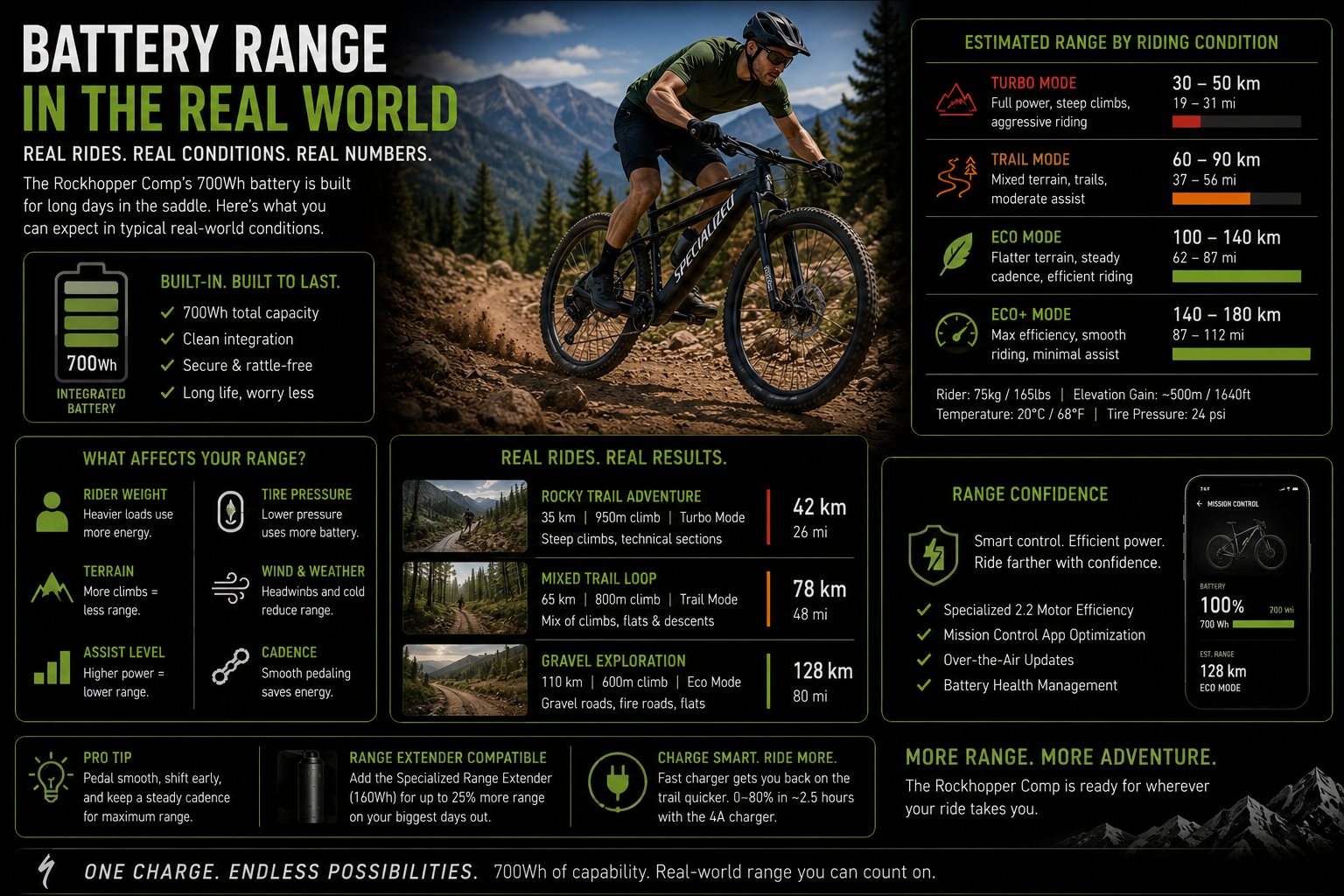
Range is always the headline question with any e-MTB.
The 750Wh battery is one of the largest available in any production e-MTB. The bike’s generous battery capacity matches expectations perfectly, offering serious endurance without adding unnecessary weight.
In practical testing across mixed trail terrain:
- Eco mode: 55–80+ miles, depending on terrain and rider weight
- Tour mode: 40–60 miles on moderate trails
- Sport mode: 30–45 miles on technical singletrack
- eMTB mode: 35–50 miles, fluctuating with rider effort
The 750Wh figure is noteworthy compared to many competitors still shipping with 630Wh or 700Wh batteries. On long trail days — the kind where you’re out for five or six hours — the difference between 630Wh and 750Wh is tangible.
The Bosch SmartSystem — App & Connectivity
This kind of smart integration is becoming a hallmark of high-end e-bikes heading into 2024 and 2025. More riders are expecting their bikes to offer a connected experience — and Cannondale has delivered without making the tech overwhelming.
The Bosch Smart System connects to the eBike Flow app via Bluetooth, offering:
- Ride statistics and trip logging
- Battery level and range prediction
- Motor mode customization
- Firmware updates over the air
- Integration with third-party navigation apps
It’s a genuinely useful connected ecosystem — not tech for tech’s sake. You can customize assist levels, set up your preferred mode profiles, and track your rides across sessions. For riders who like data, it delivers. For those who prefer to simply ride, the system stays out of the way.
Cannondale Moterra Neo 3 vs. the Full Moterra Neo Range
Moterra Neo 3 vs Neo 2 vs Neo 1 — What’s the Difference?
The same core platform — Bosch CX motor, 750Wh battery, 150mm travel, Proportional Response suspension — runs through the Moterra Neo 3, Neo 2, and Neo 1. What changes as you move up is components and, in the Neo 1’s case, frame construction.
Side-by-Side Comparison Table
| Feature | Neo 3 ($6,000) | Neo 2 (~$7,500) | Neo 1 (~$9,000+) |
|---|---|---|---|
| Frame | SmartForm C1 Alloy | SmartForm C1 Alloy | Carbon front / Alloy rear |
| Motor | Bosch CX | Bosch CX | Bosch CX |
| Battery | 750Wh | 750Wh | 750Wh |
| Fork | RockShox Yari RC | RockShox Pike Select+ | RockShox Lyrik Ultimate |
| Rear Shock | Float DPS | Float X | Float X Factory |
| Drivetrain | Shimano Deore XT | Shimano XT | Shimano XTR |
| Brakes | Shimano MT420 | Shimano XT | Shimano XTR |
| Dropper | Level TL | Reverb AXS | Reverb AXS |
| Weight | ~25kg | ~24kg | ~23kg |
The verdict on range: The Neo 3 is the smart buy if you’re transitioning to e-MTB or upgrading from a lower-spec alloy bike. The Neo 2 makes sense if you’re a committed trail rider who will notice the fork and shock upgrade immediately. The Neo 1 is for riders who want the lightest, most premium version possible and have the budget to match.
Cannondale Moterra Neo 3 vs. The Competition
vs. Trek Rail 7 (~$6,000)
The Trek Rail 7 is the most direct rival — similar price point, full-suspension e-MTB with Bosch CX power. The Rail 7 uses a full alloy frame versus the Moterra’s SmartForm C1. The Moterra’s Proportional Response suspension is a genuine differentiator — Trek’s suspension is not size-tuned in the same way. Both bikes are excellent; the Moterra edges ahead on suspension sophistication, the Rail 7 on Trek’s dealer network.
Edge: Moterra Neo 3 on suspension tech; Rail 7 on dealer accessibility.
vs. Specialized Turbo Levo Comp (~$7,000)
The Specialized Turbo Levo Comp is more expensive and uses Specialized’s own Turbo Full Power motor system — a different feel from the Bosch CX. The Levo Comp offers a lighter overall package and Specialized’s comprehensive dealer network. However, the Moterra Neo 3 undercuts it by $1,000 while delivering comparable trail performance and the larger 750Wh battery.
Edge: Turbo Levo Comp on weight and brand ecosystem; Moterra Neo 3 on value and battery.
vs. Giant Trance X E+ 2 (~$5,500)
The Giant Trance X E+ 2 is slightly cheaper and uses Yamaha’s PW-X3 motor — a capable but less refined system compared to Bosch CX. The Giant excels in geometry (progressive reach and slack angles), but the Moterra’s Proportional Response suspension and Bosch ecosystem give it a clear advantage for riders who value system refinement and connected technology.
Edge: Moterra Neo 3 on motor quality and suspension tech; Trance X E+ 2 on geometry and price.
Who Should Buy the Cannondale Moterra Neo 3?
It’s Perfect For…
- Serious trail and all-mountain riders ready to add electric assist without compromising trail feel
- Riders who demand more from their rides, whether that’s a weekend in the mountains or just exploring local trails after work — this e-bike brings together cutting-edge performance and thoughtful design in a way that feels surprisingly effortless once you get going
- Riders who came back to cycling after a break — riders who have been off a bike for years say the Moterra has enabled them to get back out and ride longer than they could on an analog bike
- Anyone who wants Bosch reliability — the Bosch CX ecosystem is the most mature, most supported, and most widely serviced e-MTB drive system on the market
- Practical cyclists who need rack, fender, and kickstand compatibility alongside trail performance
- Riders seeking a bike that still packs quite a heavyweight punch — very capable e-MTB that can handle shredding days and touring adventures
You Might Want to Look Elsewhere If…
- Weight is your obsession. At over 25kg for a 150mm travel bike, it’s not that light. For riders who want the lightest possible e-MTB, the Moterra Neo 1 (carbon front triangle) or Specialized Turbo Levo SL (lightweight motor) would be better fits.
- Your budget is under $5,500. The Moterra 4 exists for a reason — it provides much of the same Bosch CX experience at significantly lower cost, just with a less refined component spec.
- You want enduro/downhill-specific geometry. The 150mm travel and trail geometry make the Neo 3 an all-mountain machine. Dedicated enduro riders wanting 160–180mm travel should look at purpose-built enduro e-MTBs.
- Take a closer look at the stays and you’ll see kickstand, rack, and mudguard mounts — if you’re a pure performance rider who will never use these features, you’re effectively paying for capability you won’t use.
Price, Value & Where to Buy
Is $6,000 Worth It?
Sure, it comes with a premium price tag. But what you’re getting is a thoughtfully designed e-bike that combines genuine trail capability, Bosch’s best motor system, a 750Wh battery, and Cannondale’s industry-leading Proportional Response suspension platform.
Let’s frame the value honestly:
What $6,000 buys you on the Moterra Neo 3:
- Bosch Performance Line CX motor (the best production e-MTB motor available)
- 750Wh battery (among the largest in production e-MTBs)
- Proportional Response Tuned suspension (size-specific — a genuine engineering advantage)
- RockShox Yari RC, 150mm front and rear travel
- Shimano 12-speed XT drivetrain
- Shimano MT420 4-piston brakes with 203mm rotors
- Maxxis Minion DHF / Rekon tire combination (tubeless ready)
- SmartForm C1 Alloy frame with lifetime warranty
- Practical features: rack mounts, fender mounts, kickstand mount, water bottle bosses
Compared to what equivalent non-electric trail bikes cost — and considering the e-MTB drive system adds at least $1,500–$2,000 in cost — the Moterra Neo 3 is genuinely competitive at $6,000 for what it delivers.
Where to Buy:
- Cannondale directly — cannondale.com
- REI — often runs seasonal promotions on Cannondale e-MTBs
- Local authorized Cannondale dealers — recommended for pre-purchase test rides and local service support
- Mike’s Bikes — free shipping on all bikes
- Used market — worth checking Pinkbike Buy/Sell and The Pro’s Closet for discounted near-new examples
Frequently Asked Questions
Q: How much does the Cannondale Moterra Neo 3 cost? A: It is priced at $6,000 USD when purchased new. Pricing may vary slightly by region, retailer, and model year. The used market and seasonal dealer promotions can bring this number down meaningfully.
Q: What motor is in the Cannondale Moterra Neo 3? A: Featuring a powerful Bosch Performance Line CX 250W motor with 85 Nm of torque, the Moterra Neo 3 uses Bosch’s most powerful e-MTB drive unit — the same system found in many e-MTBs costing significantly more.
Q: What is Proportional Response Tuned suspension? A: Put simply, PRT means the suspension on the Moterra Neo has been tuned for each of the four frame sizes, so everyone gets to ride a bike that is tuned more closely to their height and body weight, as opposed to adopting a one-size-fits-all approach.
Q: What sizes does the Cannondale Moterra Neo 3 come in? A: The 2024 Cannondale Moterra Neo 3 comes in sizes SM, MD, LG, and XL. The size Small comes with a 27.5-inch wheel, while M, L, and XL are full 29ers, and there are different length dropper posts throughout.
Q: Is the Cannondale Moterra Neo 3 good for beginners? A: This isn’t a mountain bike for those just starting downhill riding — it’s capable of so much more than riding over bumpy ground. However, its multiple assist modes make it highly accessible for riders returning to cycling or building trail confidence progressively.
Q: What is the battery range on the Moterra Neo 3? A: The 750Wh Bosch PowerTube battery provides ample range for full trail days. Real-world range depends heavily on assist mode, terrain, and rider weight, but most riders report 35–60+ miles per charge in mixed trail conditions. As one independent tester noted, the battery is very, very good.
Final Verdict
The Cannondale Moterra Neo 3 doesn’t try to be the lightest e-MTB. It doesn’t chase the most exotic carbon layup or the flashiest component spec. What it does — and does very well — is deliver a comprehensive, trail-capable, practically equipped electric mountain bike built around Bosch’s finest motor and Cannondale’s most thoughtful suspension innovation.
It’s a dual-suspension e-mountain bike built to crush boundaries. The Proportional Response Tuned suspension is a genuine differentiator — size-specific suspension performance is something almost no competitor at this price point offers. The Bosch CX motor is class-leading. The 750Wh battery outlasts most riders. And the practical features — rack mounts, fender mounts, kickstand compatibility — make it a bike you’ll actually want to ride every day, not just on perfect trail conditions. It blends power, comfort, and cutting-edge tech in a way that makes each ride feel like a seamless adventure rather than a workout.
At $6,000, it’s a significant investment. But within the premium e-MTB segment, it represents compelling value — especially when compared to competitors asking $7,000+ for similar or lesser capability.
Our Rating: 4.6 / 5.0
| Category | Score |
|---|---|
| Trail Performance | ⭐⭐⭐⭐⭐ |
| Climbing Ability | ⭐⭐⭐⭐⭐ |
| Suspension Quality | ⭐⭐⭐⭐½ |
| Battery & Range | ⭐⭐⭐⭐⭐ |
| Component Quality | ⭐⭐⭐⭐ |
| Practicality Features | ⭐⭐⭐⭐⭐ |
| Value for Money | ⭐⭐⭐⭐ |
| Overall | ⭐⭐⭐⭐¾ (4.6/5) |
Bottom line: If you want the best all-mountain e-MTB under $7,000 with the Bosch ecosystem, Proportional Response suspension, and a battery that won’t quit before you do — the Cannondale Moterra Neo 3 is the one to beat.