
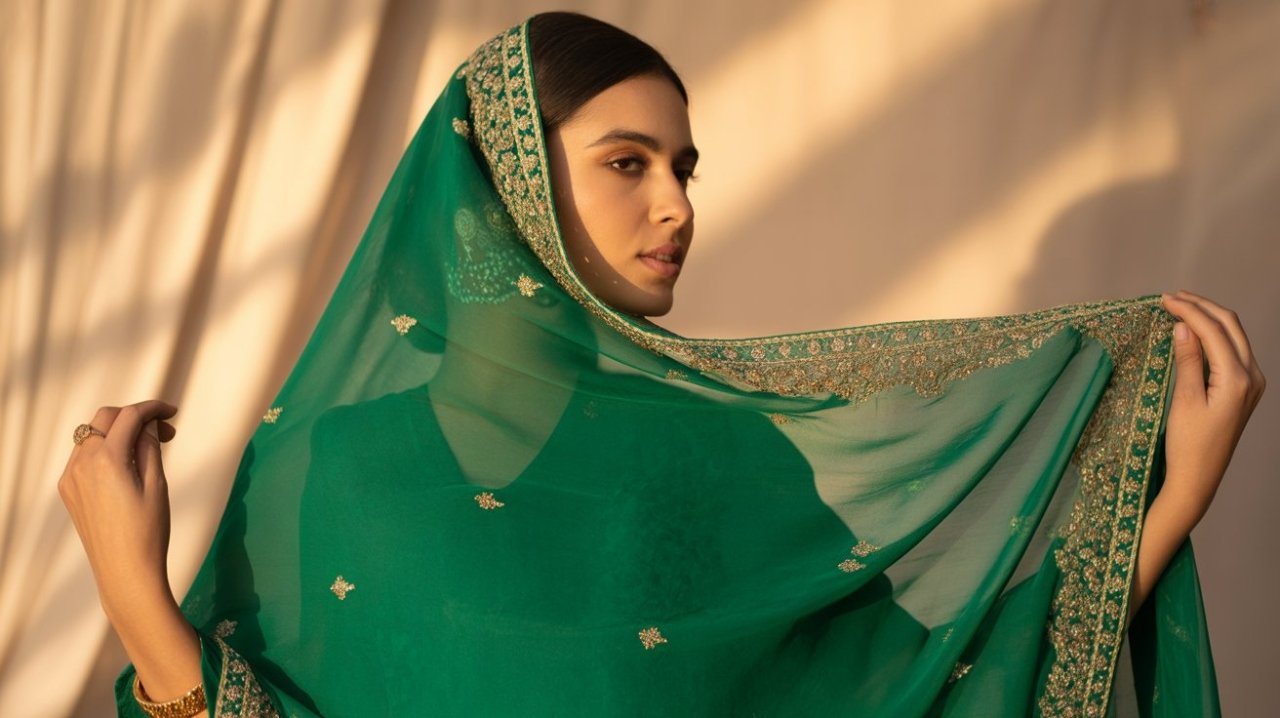
The dupatta is more than just a piece of fabric. It is a symbol of culture, identity, and grace. Across South Asia, it is worn with pride and meaning. Whether paired with traditional clothes or modern outfits, the dupatta adds beauty and charm. Moreover, it reflects history, values, and personal style. Because of this, it remains an essential part of fashion. In this article, you will explore the world of dupatta, including its history, types, fabrics, and modern uses. Additionally, you will understand why it continues to stay popular today.
What Is a dupatta?
A dupatta is a long scarf or shawl worn mainly by women. It is usually paired with outfits like shalwar kameez, lehenga, or kurta. However, it is not limited to these styles. Today, it is also worn with western outfits for a fusion look.
In simple terms, the dupatta completes an outfit. It adds elegance and balance. Furthermore, it can be styled in many ways. For example, it can be draped over the shoulders, wrapped around the neck, or placed over the head. Because of this flexibility, it suits different occasions and moods.
Although it may seem like a small accessory, its impact is huge. It transforms a simple outfit into something special. Therefore, it is loved by people of all ages.
A Glimpse into History
The history of the dupatta is rich and fascinating. It has been part of South Asian culture for hundreds of years. In earlier times, it was worn mainly for modesty. Women used it to cover their heads and shoulders.
During royal periods, especially in the Mughal era, the dupatta became more decorative. Fine fabrics like silk and muslin were used. In addition, detailed embroidery and designs were added. As a result, it became a symbol of beauty and status.
Over time, its role changed. While it still represents tradition, it also reflects modern fashion. Today, designers experiment with colors, patterns, and styles. Therefore, the dupatta continues to evolve while keeping its cultural roots.
Cultural Importance of dupatta
The dupatta holds deep cultural value. In many communities, it represents respect and modesty. For example, it is often used to cover the head in religious places. This act shows honor and humility.
Moreover, the dupatta plays an important role in celebrations. During weddings, festivals, and family gatherings, it becomes a key part of the outfit. Bright colors and rich fabrics are chosen to match the joyful mood.
In addition, it carries emotional meaning. Sometimes, dupattas are passed down through generations. These pieces hold memories and stories. Because of this, they become more than just clothing items.
Furthermore, the dupatta connects people to their heritage. Even in modern times, it reminds individuals of their cultural identity.
Different Types of dupatta
There are many types of dupatta, each with its own charm. First, cotton dupattas are simple and comfortable. They are perfect for daily wear. Because they are light, they are easy to carry.
Next, chiffon dupattas are soft and flowy. They are often worn at parties or formal events. Their light texture adds elegance. Similarly, georgette dupattas offer a stylish and modern look.
Silk dupattas, on the other hand, are rich and luxurious. They are usually chosen for weddings and special occasions. Their shine and smooth texture make them stand out.
Additionally, there are traditional styles like bandhani, phulkari, and banarasi dupattas. Each type reflects a specific region and culture. Therefore, every dupatta tells a unique story.
Fabrics and Their Charm
The fabric of a dupatta plays a big role in its appearance. Different materials create different effects. For instance, cotton feels soft and breathable. It is ideal for hot weather.
Silk, however, adds richness and shine. It is often used for formal wear. Meanwhile, chiffon and georgette are known for their light and airy feel. They create a graceful flow when worn.
Net dupattas are also popular. They are often decorated with embroidery or beads. Because of this, they look fancy and eye-catching.
Moreover, the choice of fabric depends on the occasion. Casual events require simple fabrics, while special occasions call for more detailed designs. Therefore, selecting the right fabric is important.
How to Style a dupatta
Styling a dupatta can completely change your look. There are many ways to wear it. For example, you can drape it over both shoulders for a classic style. This look is simple and elegant.
Alternatively, you can place it over one shoulder. This creates a modern and trendy appearance. In addition, you can wrap it around your neck like a scarf. This style is both comfortable and stylish.
For formal events, the dupatta can be pinned neatly. This keeps it in place and gives a polished look. On the other hand, letting it flow freely creates a relaxed vibe.
Furthermore, experimenting with different styles allows you to express your personality. Therefore, the dupatta becomes a tool for creativity.
dupatta in Modern Fashion
Today, the dupatta is not limited to traditional wear. It has entered modern fashion in exciting ways. Designers use it in creative designs. For example, it is turned into capes, jackets, and scarves.
Young people especially enjoy mixing styles. They pair dupattas with jeans, skirts, or dresses. As a result, a unique fusion look is created.
Moreover, fashion shows often feature innovative dupatta designs. Bright colors, bold prints, and new fabrics are used. Because of this, the dupatta remains fresh and relevant.
At the same time, its traditional value is not lost. It continues to represent culture and heritage. Therefore, it balances both old and new styles beautifully.
Caring for Your dupatta
Proper care is important to keep a dupatta looking beautiful. First, always check the fabric before washing. Some materials require gentle handling.
Cotton dupattas can usually be washed at home. However, silk and delicate fabrics should be dry cleaned. This helps maintain their quality.
In addition, store dupattas carefully. Folding them neatly prevents wrinkles. Hanging them on padded hangers is also a good option.
Furthermore, avoid direct sunlight for long periods. This can fade colors. By taking these steps, your dupatta will last longer and stay attractive.
Why dupatta Will Always Stay in Style
Fashion trends come and go. However, some items remain timeless. The dupatta is one of them. It continues to be loved across generations.
One reason is its versatility. It can be styled in many ways. Therefore, it never feels outdated. Another reason is its cultural importance. It connects people to their roots.
Moreover, designers keep updating its look. New patterns and styles are introduced regularly. As a result, it stays fresh and exciting.
Additionally, it allows personal expression. People can choose colors, fabrics, and styles that match their taste. Because of this, it appeals to everyone.
Conclusion
The dupatta is much more than a fashion accessory. It is a blend of tradition, beauty, and creativity. From its historical roots to modern trends, it has come a long way.
Moreover, it continues to play an important role in culture and fashion. Whether worn for modesty, style, or celebration, it adds elegance to every outfit.
In conclusion, the dupatta stands as a timeless piece of clothing. It connects the past with the present. Therefore, it will always remain a cherished part of fashion and identity.